Nowy program Letnia Szkoła Międzynarodowego Prawa Karnego · 7–11 września 2026 Rekrutacja zakończona

Category: News

News

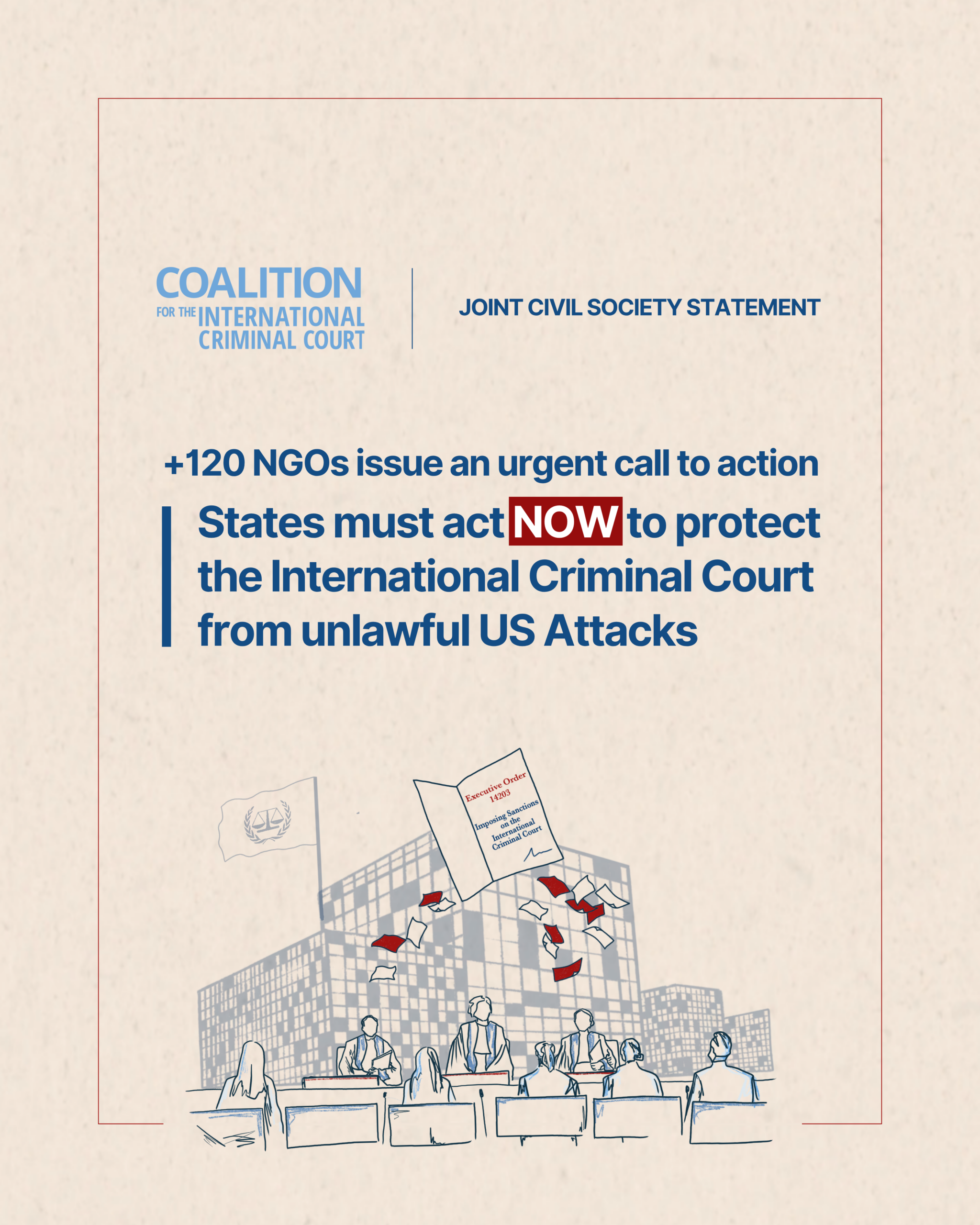
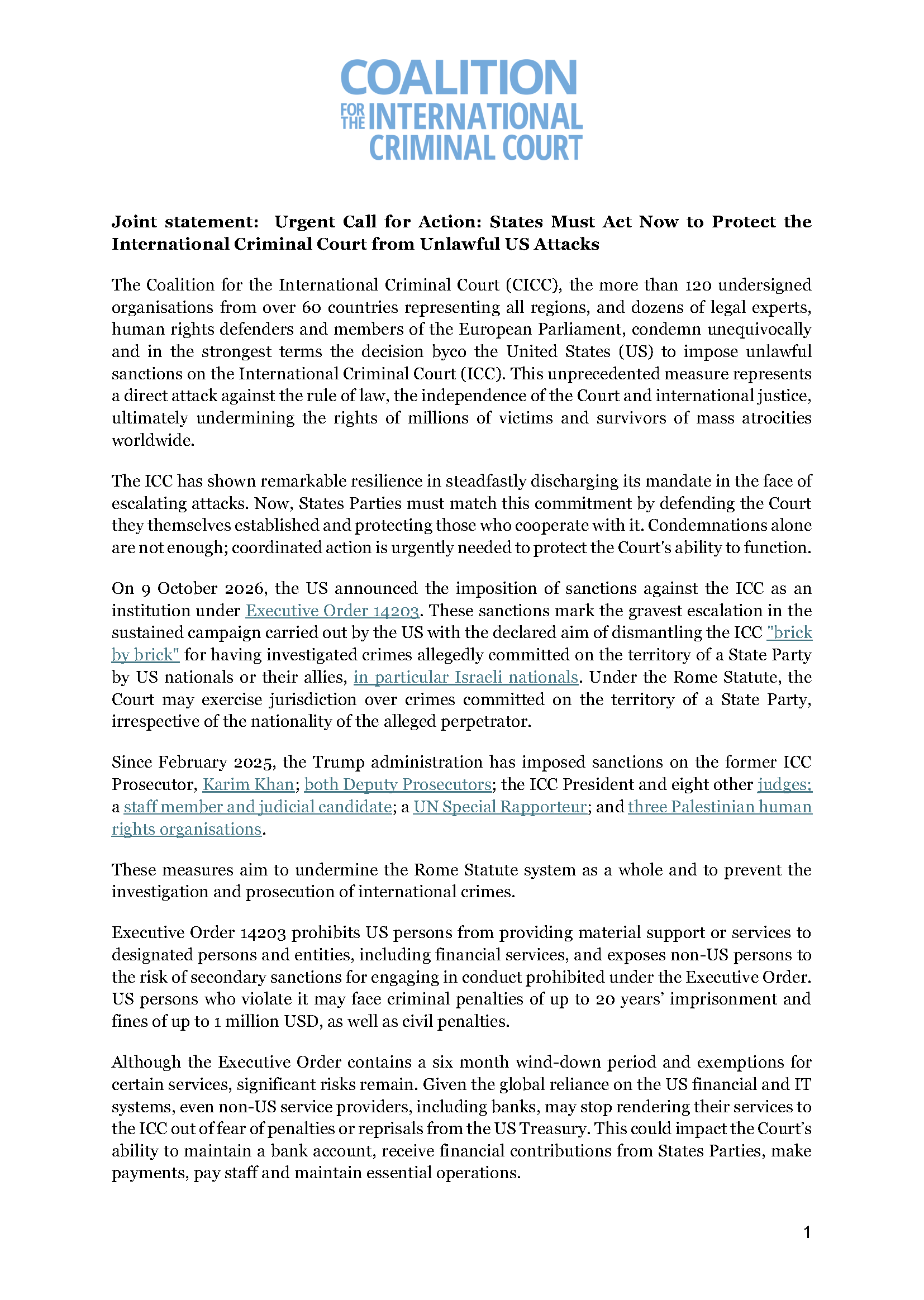
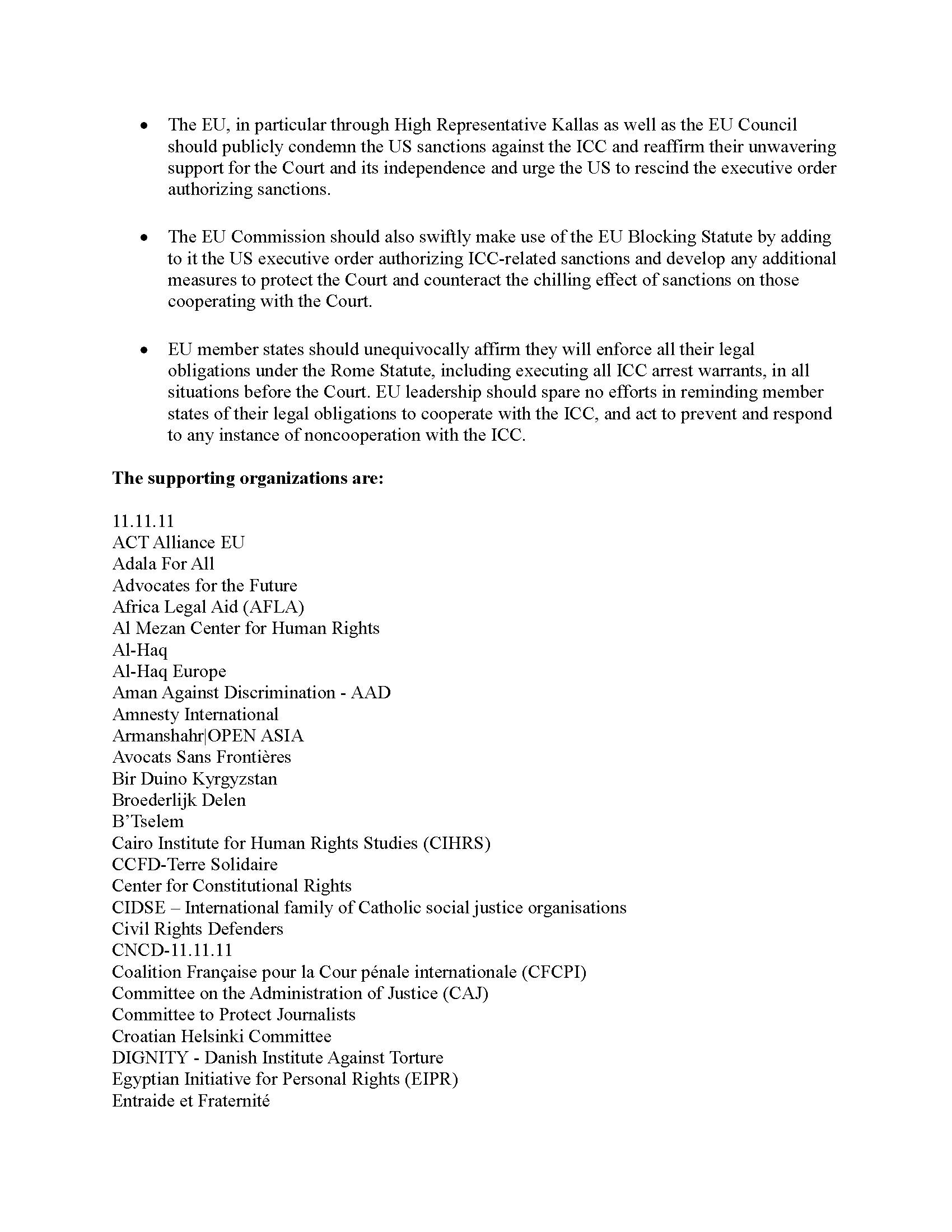
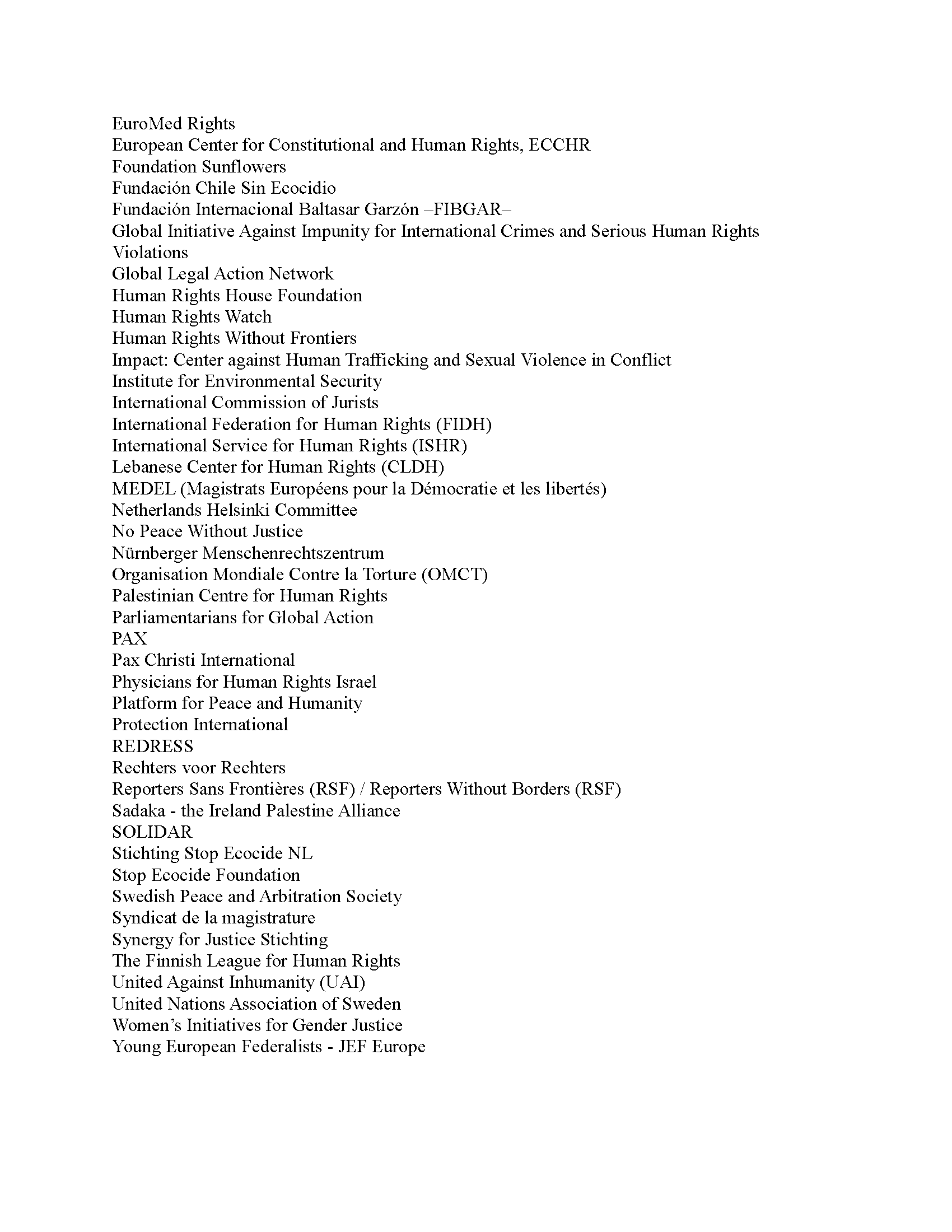
Foundation Sunflowers Signs Statement in Support of the International Criminal Court

The Foundation Sunflowers has joined a statement prepared by the Coalition for the International Criminal Court in response to US sanctions targeting the International Criminal Court (ICC) and announced on 9 October 2026.

As an organisation committed to supporting accountability for international crimes and helping advance justice for victims of armed conflict, we stand in solidarity with the victims and survivors of these crimes and reaffirm our support for the Court and its mandate.

The ICC was established to prosecute individuals responsible for the gravest crimes of concern to the international community. Its ability to carry out this mandate is essential to the pursuit of justice, the fight against impunity and the recognition of victims’ rights.

We stand with victims of armed conflicts and with the institutions working to ensure that those responsible for international crimes are held accountable. Justice must remain possible, and the pursuit of accountability must not be abandoned.
 
News

Project Sunflowers Presented at the Warsaw Human Dimension Conference 2026

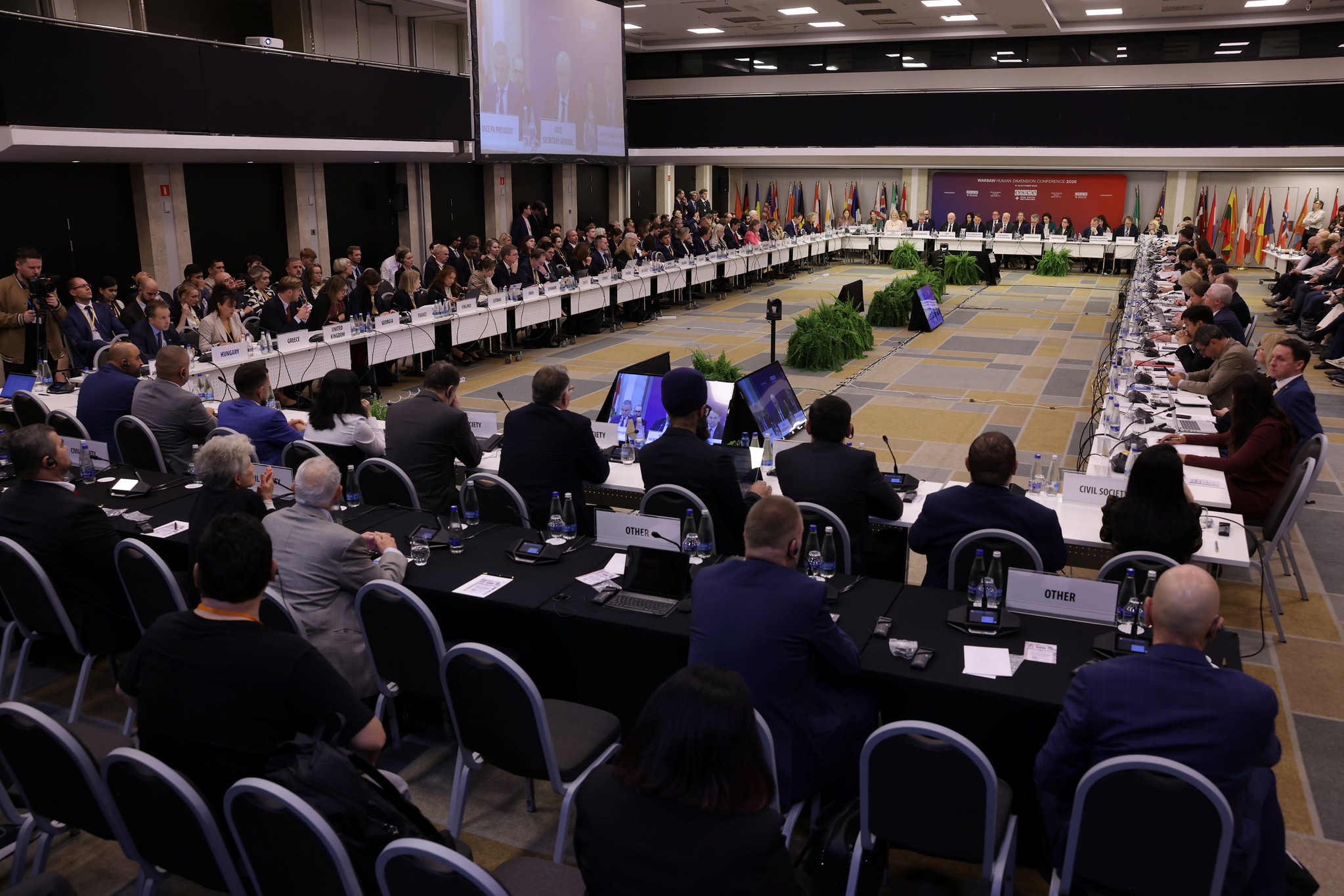
On 5 October 2026, an expert side event entitled “Domestic War Crimes Adjudication in Ukraine: A Driver of International Law and Justice” was held during the Warsaw Human Dimension Conference 2026, organised by the OSCE Office for Democratic Institutions and Human Rights (ODIHR).

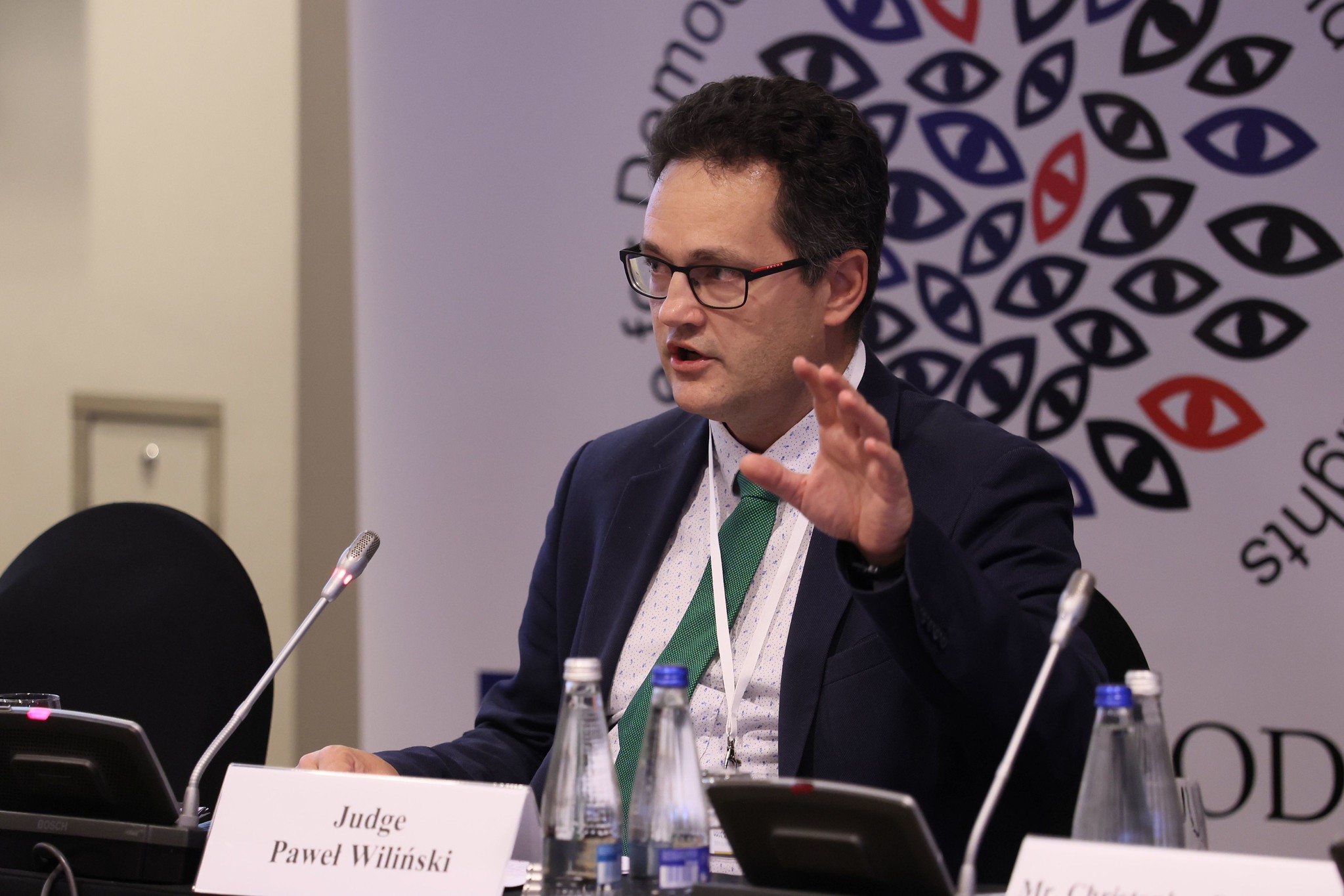
Among the speakers was Professor Paweł Wiliński, Chair of the Sunflowers Foundation Council and co-creator of the Project Sunflowers, who joined leading experts and practitioners discussing the role of Ukrainian domestic courts in the adjudication of war crimes and the broader development of international law and justice.

The discussion focused on a number of key issues, including the legal qualification of international crimes, evidence gathering and documentation, the relationship between domestic and international accountability mechanisms, and the growing body of Ukrainian jurisprudence concerning war crimes committed in the context of the armed conflict.

During the panel, Professor Wiliński also presented the experience of the Project Sunflowers, highlighting its contribution to the documentation of international crimes and serious violations of international law committed in connection with the war in Ukraine. He emphasised the importance of reliable evidence collection, cooperation between legal practitioners and civil society, and the role of documentation initiatives in supporting future accountability processes.

The event formed part of ODIHR’s broader activities supporting domestic adjudication of international crimes in Ukraine and strengthening the application of international law by national courts.
News

Justice in Wartime: From Documentation to Accountability – a Student Event at KNEU

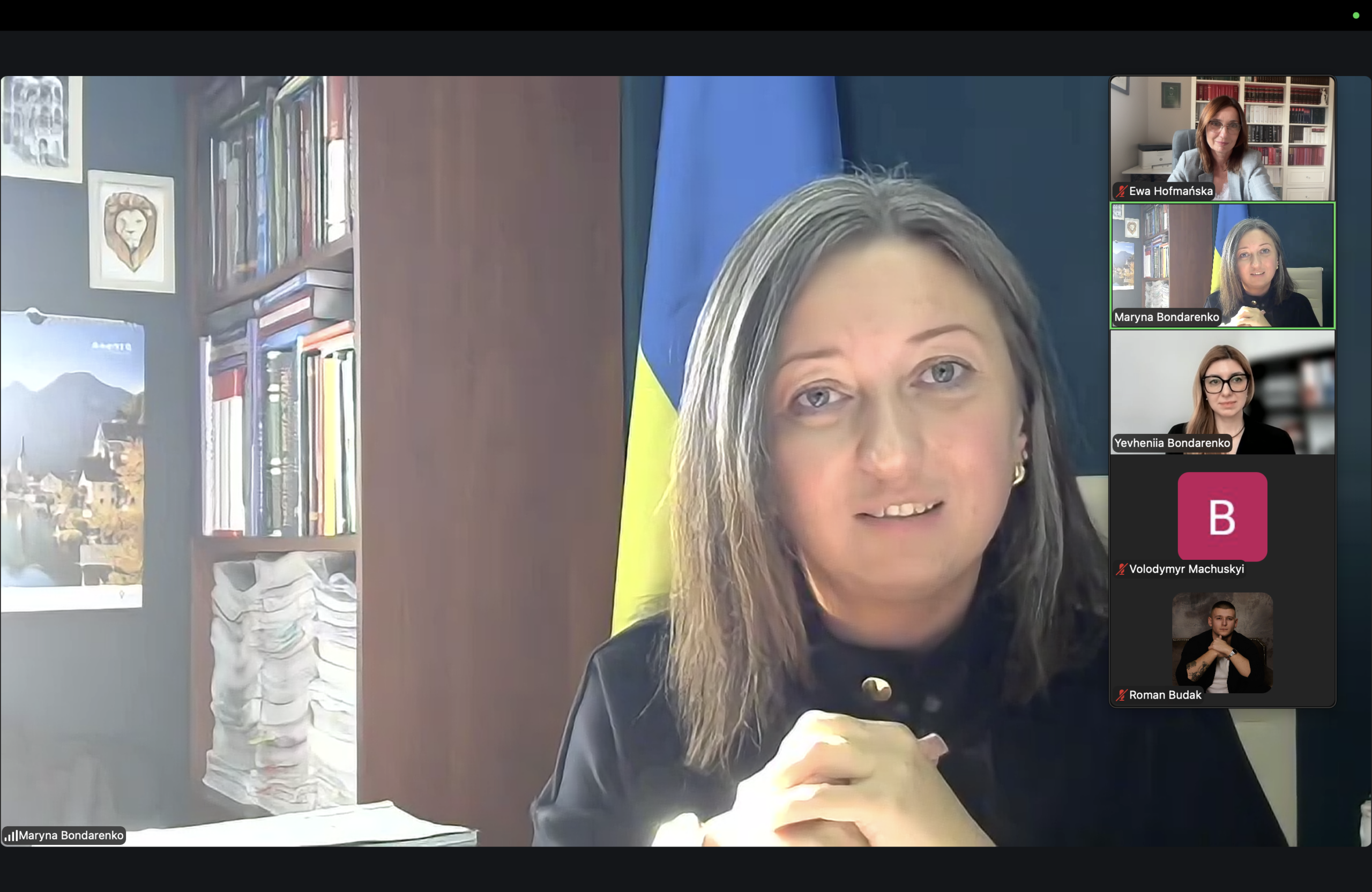
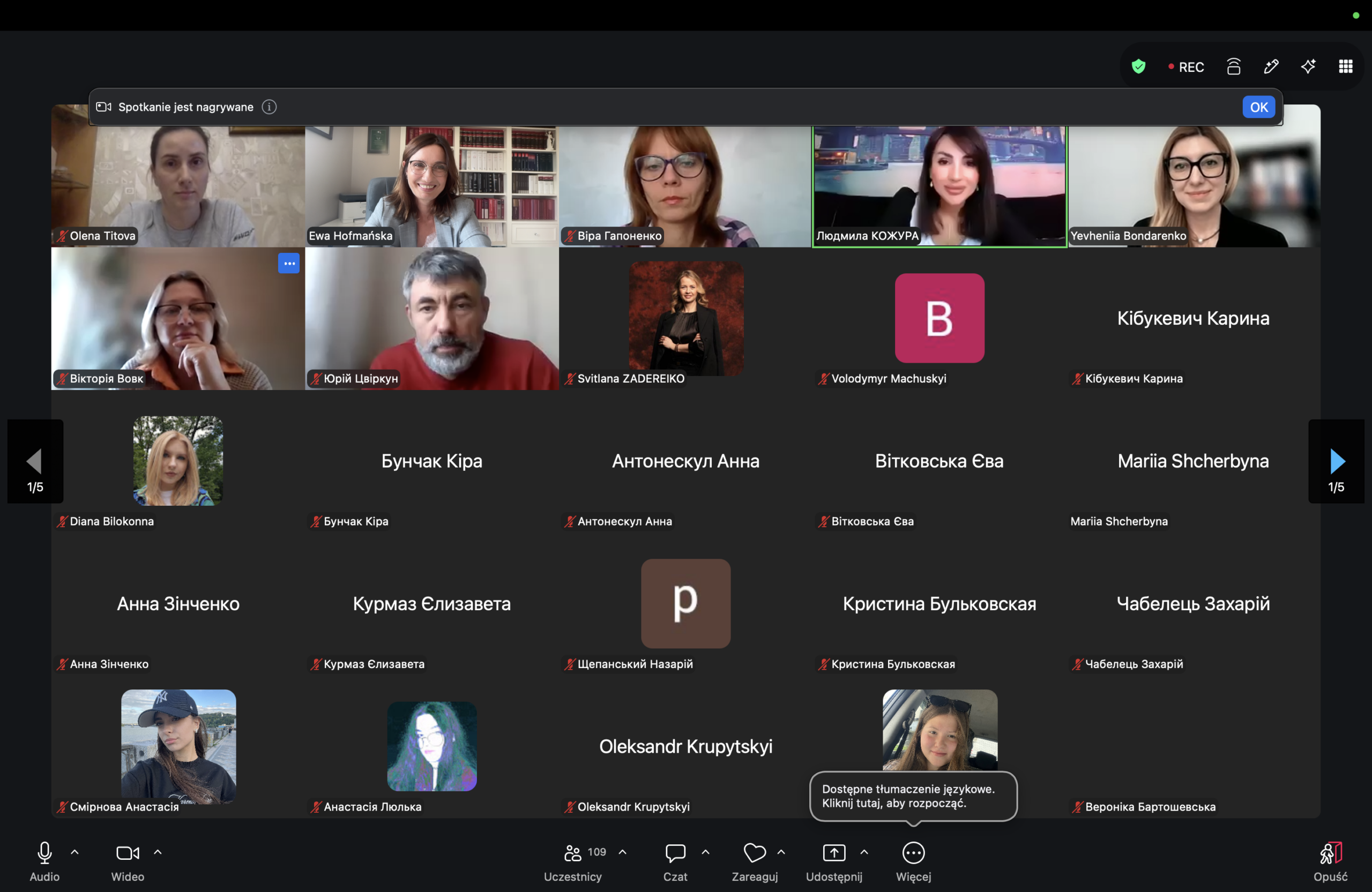
On 30 September 2026, students of the Kyiv National Economic University (KNEU) took part in an event entitled “Justice in Wartime: From Documentation to Accountability”, organised as part of the cooperation between the KNEU Institute of Law and the Foundation Sunflowers . The central part of the event was a screening of the documentary film Justice in Wartime, produced by the EU Pravo-Justice Project.

The event brought together students and academics to explore the challenges of documenting international crimes committed during armed conflict and the pathways from documentation to accountability.

During the event, Dr Ewa Hofmańska, President of the Foundation Sunflowers Executive Board and co-creator of the Project Sunflowers, presented the Project and its experience in supporting the documentation of international crimes and serious violations of international law committed in Ukraine. She spoke about the importance of collecting information in a way that can contribute to future accountability processes and about the role that lawyers and civil society can play in ensuring that evidence and testimonies are preserved and can ultimately support justice.

A special guest of the event was Judge Maryna Bondarenko, who shared her personal professional experience of adjudicating cases during wartime in Ukraine in an interview conducted by Dr Yevheniia Bondarenko, Member of the Executive Board of the Sunflowers Foundation. The conversation offered students a first-hand perspective on the realities and challenges faced by judges working in the Ukrainian justice system while the country remains at war.

The film screening and interview with Judge Bondarenko provided an opportunity to reflect on the relationship between documentation, evidence, judicial proceedings and accountability. For future lawyers, these issues are not only matters of legal doctrine but also questions of professional responsibility and of how the justice system can respond to the consequences of armed conflict.
The event was part of the ongoing cooperation between the KNEU Institute of Law and the Foundation Sunflowers, aimed at providing students with practical knowledge of international criminal law, accountability mechanisms and the legal challenges arising from Russia’s full-scale war against Ukraine.

We are grateful to the students and academic community of KNEU for their engagement, to Judge Maryna Bondarenko for sharing her experience and perspective with the next generation of lawyers, and to the EU Pravo-Justice Project for the documentary that provided an important starting point for the event.
News

Sunflowers Initiates Consultation on the Needs of Ukrainians in Poland

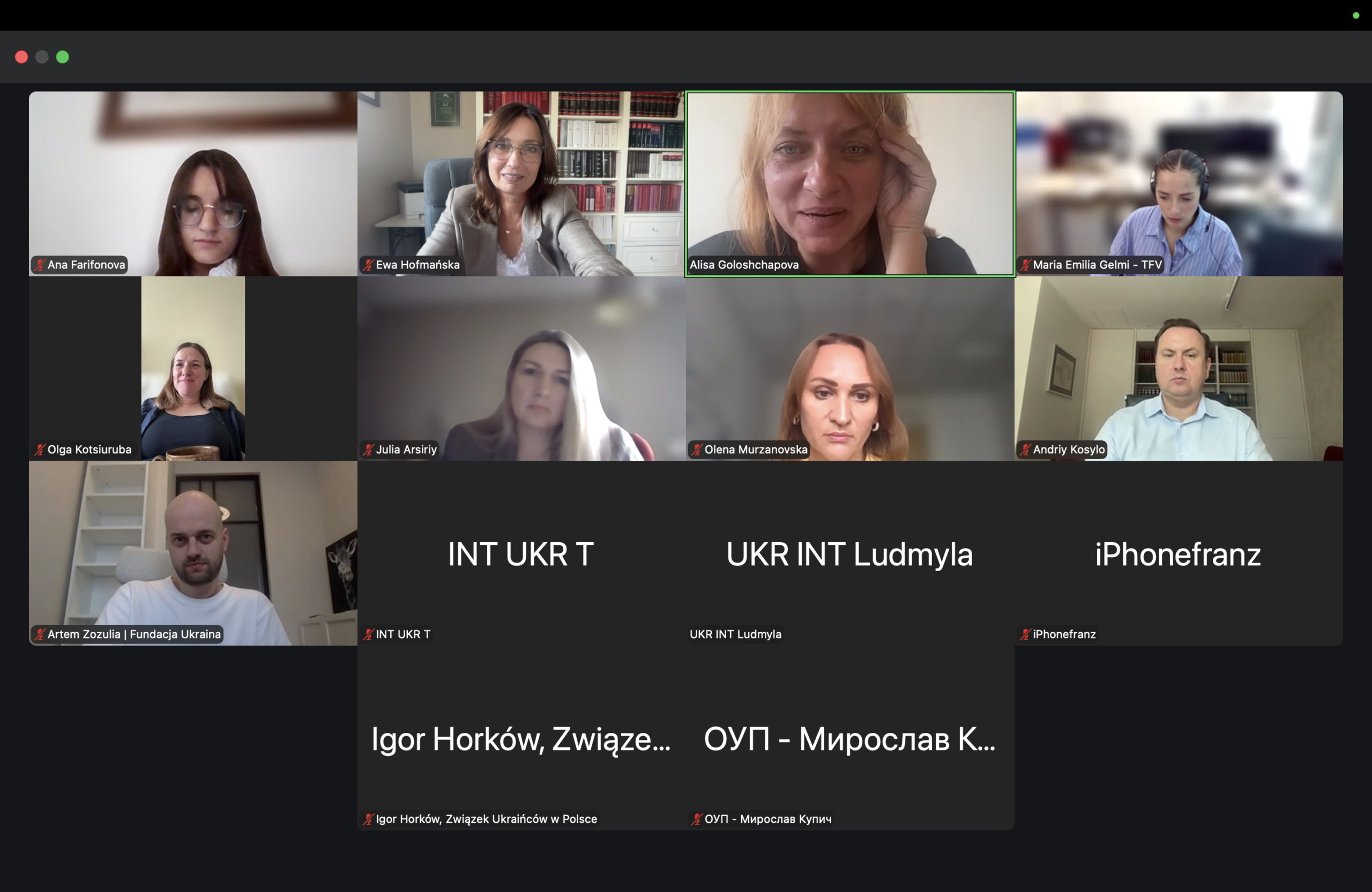
On 11 September 2026, the Foundation Sunflowers brought together Polish civil society organisations and representatives of the Ukrainian diaspora in Poland for a consultation with the Trust Fund for Victims (TFV) of the International Criminal Court.

The meeting provided an opportunity for organisations working directly with Ukrainians affected by the war to share their knowledge and experience with the TFV. The discussion focused on the communities of Ukrainian refugees living in Poland, the harms and losses they have experienced as a result of the war, and their most pressing needs.

The consultation forms part of the ongoing preparations for reparations programmes to be developed under the TFV’s assistance mandate. The perspectives shared by participating organisations and members of the Ukrainian diaspora will help inform the Fund’s understanding of the needs and circumstances of people affected by the war who are now living in Poland.

The Foundation Sunflowers is grateful to all participating organisations and to the TFV team for engaging in this important consultation.
News

Summer School in International Criminal Law Has Begun

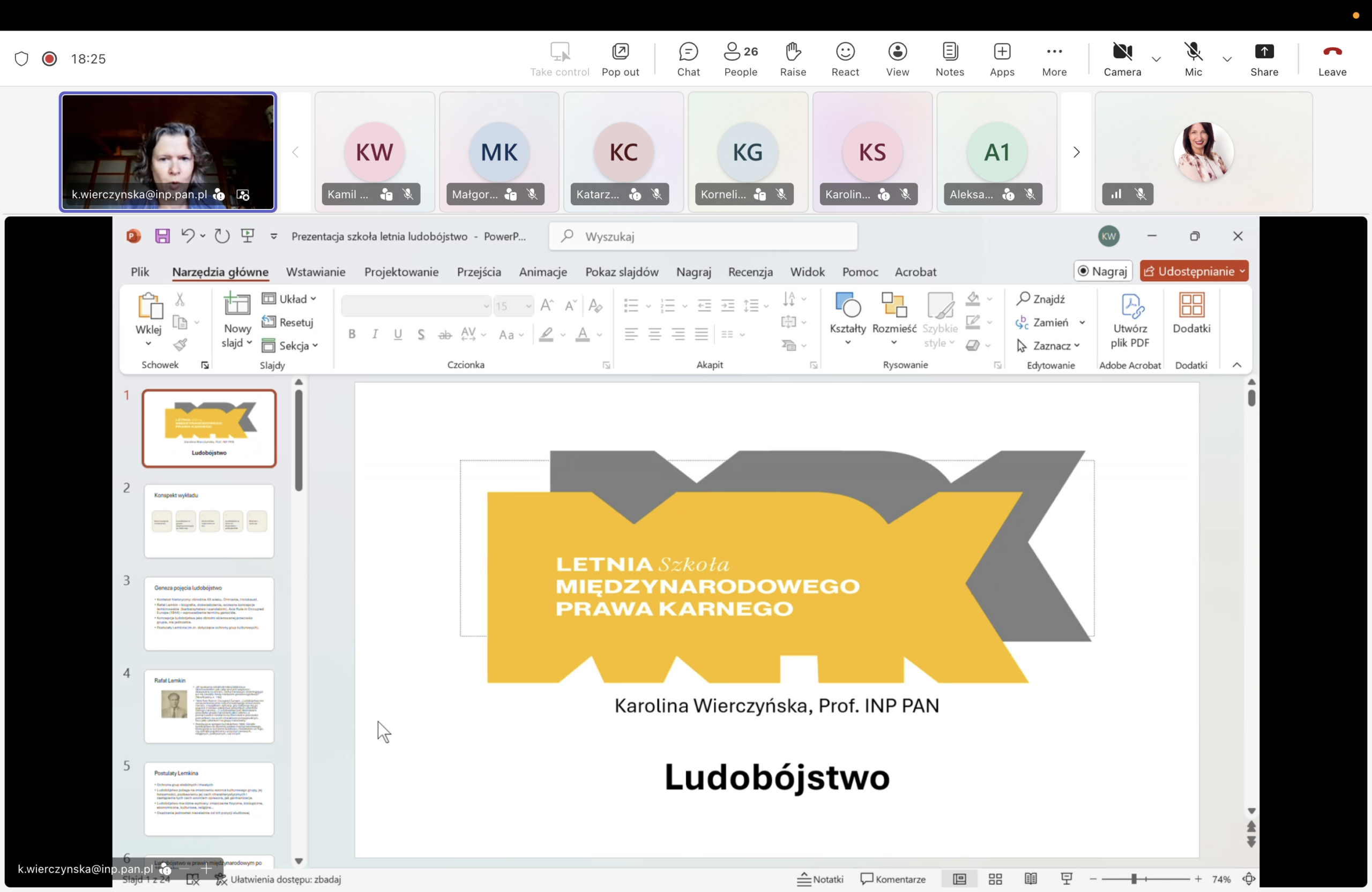
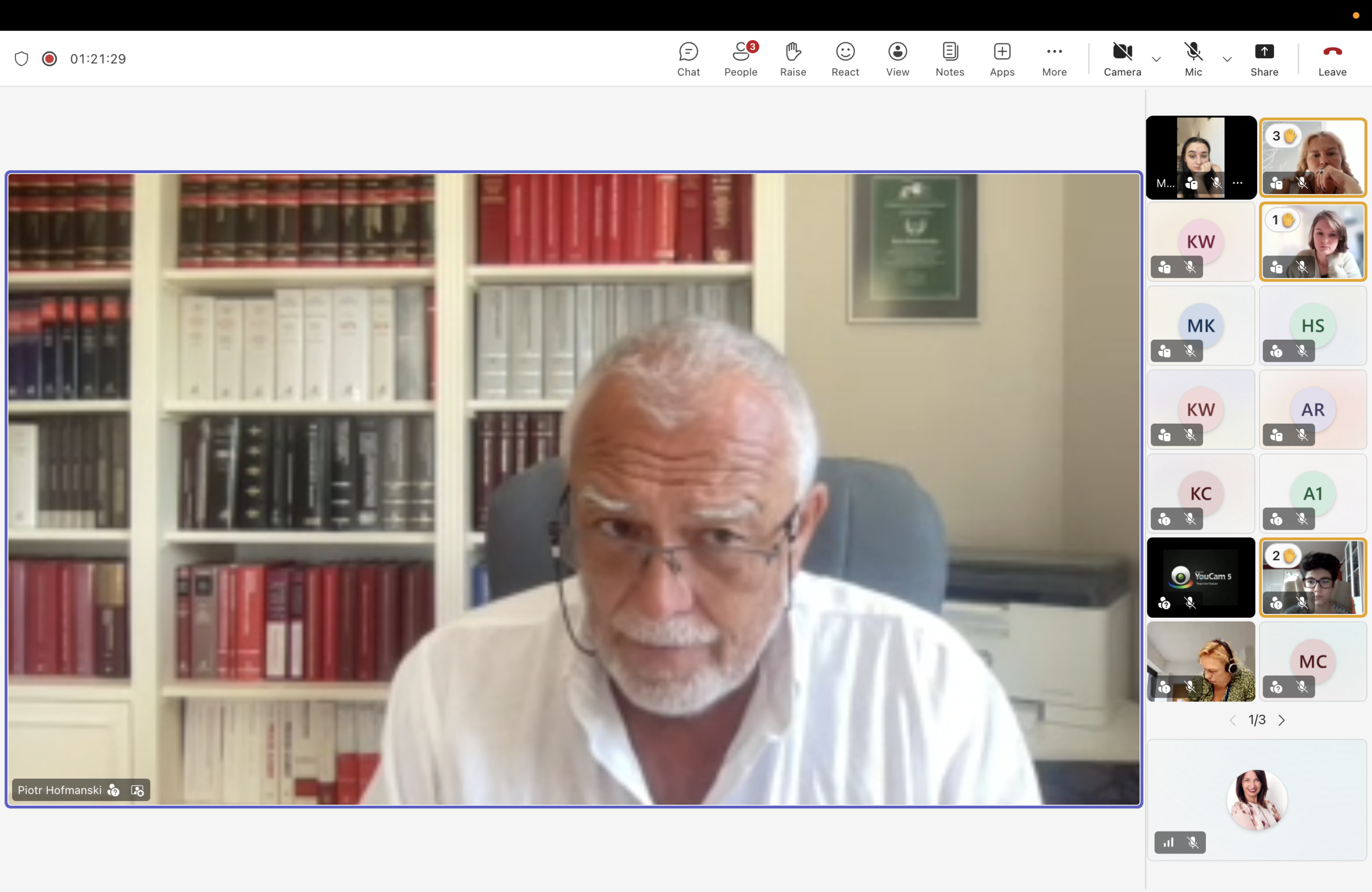
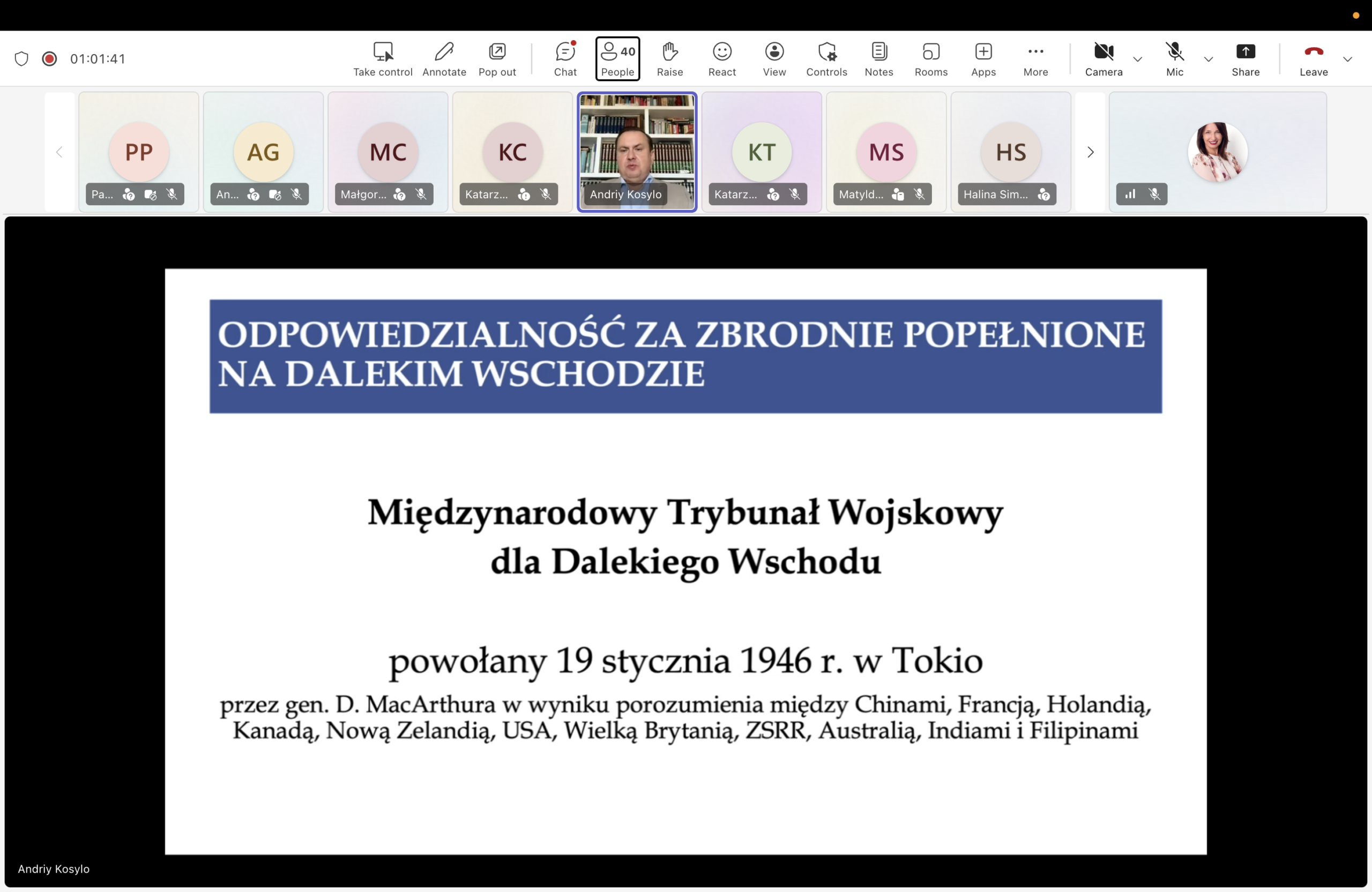
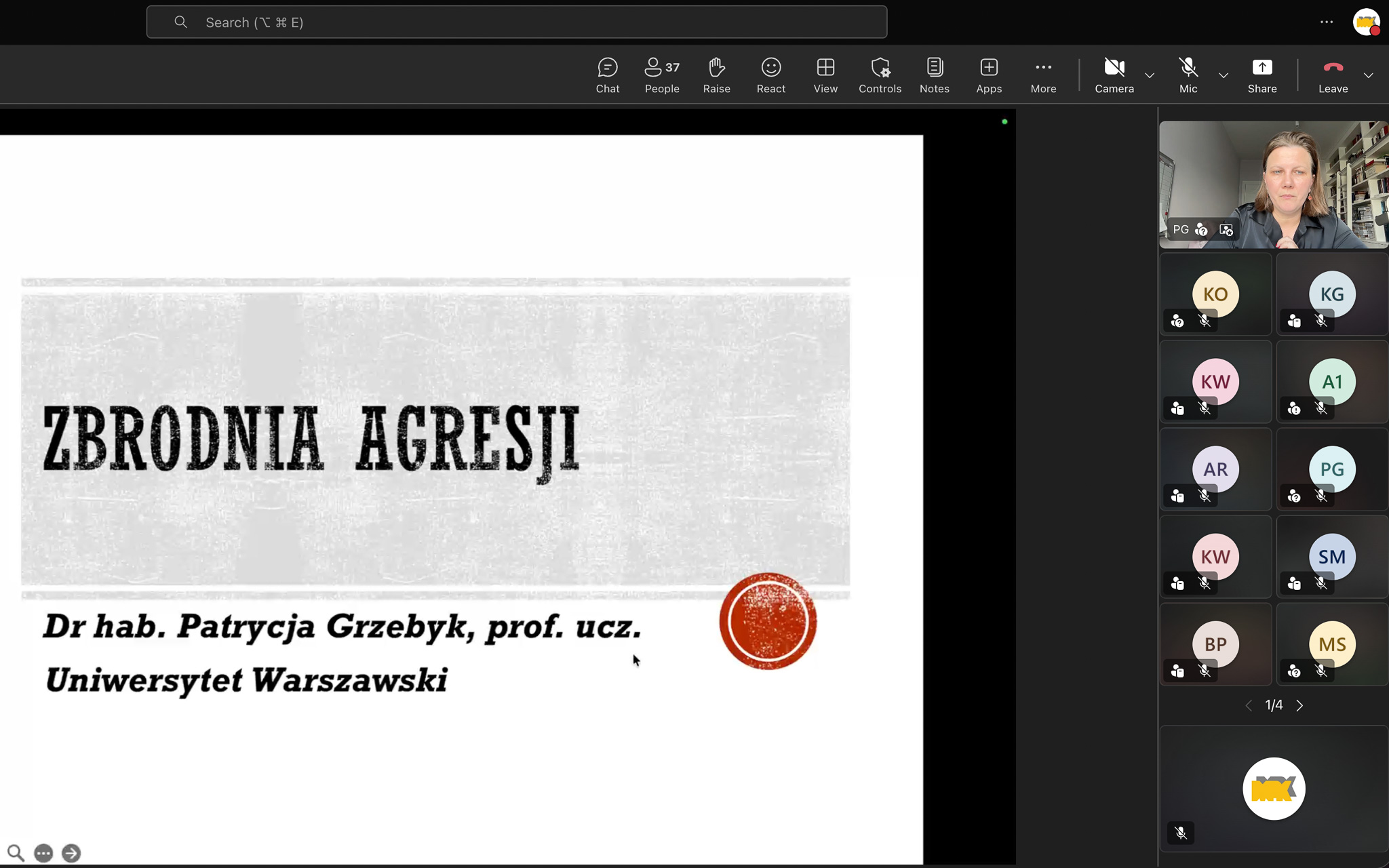
On 7 September, the Summer School in International Criminal Law, organised by the Foundation Sunflowers, began. Over five days, legal professionals, young lawyers and law students are taking part in an intensive programme dedicated to key aspects of international criminal justice.
 
The programme comprises 38 hours of lectures delivered by leading Polish experts, including practitioners and academics with experience working with international criminal tribunals, courts, prosecution services and other institutions involved in international justice.
 
The Summer School covers the key stages and concepts of international criminal law — from the history and development of international criminal justice and the establishment of the International Criminal Court, through jurisdiction and sources of law, to crimes against humanity, war crimes, genocide and the crime of aggression.
 
The programme also focuses on practical aspects of international criminal proceedings, including modes of liability, admissibility, investigations, evidentiary rules, trial proceedings and appeals, as well as cooperation between international courts and States and the enforcement of their judgments.
 
The School concludes with a session dedicated to reparations for victims of international crimes, addressing one of the central challenges facing international criminal justice today: ensuring meaningful redress for victims of serious harm.
Following the lecture programme, participants will have the opportunity to receive 6-weeks of tutoring in preparing their final essays.
News

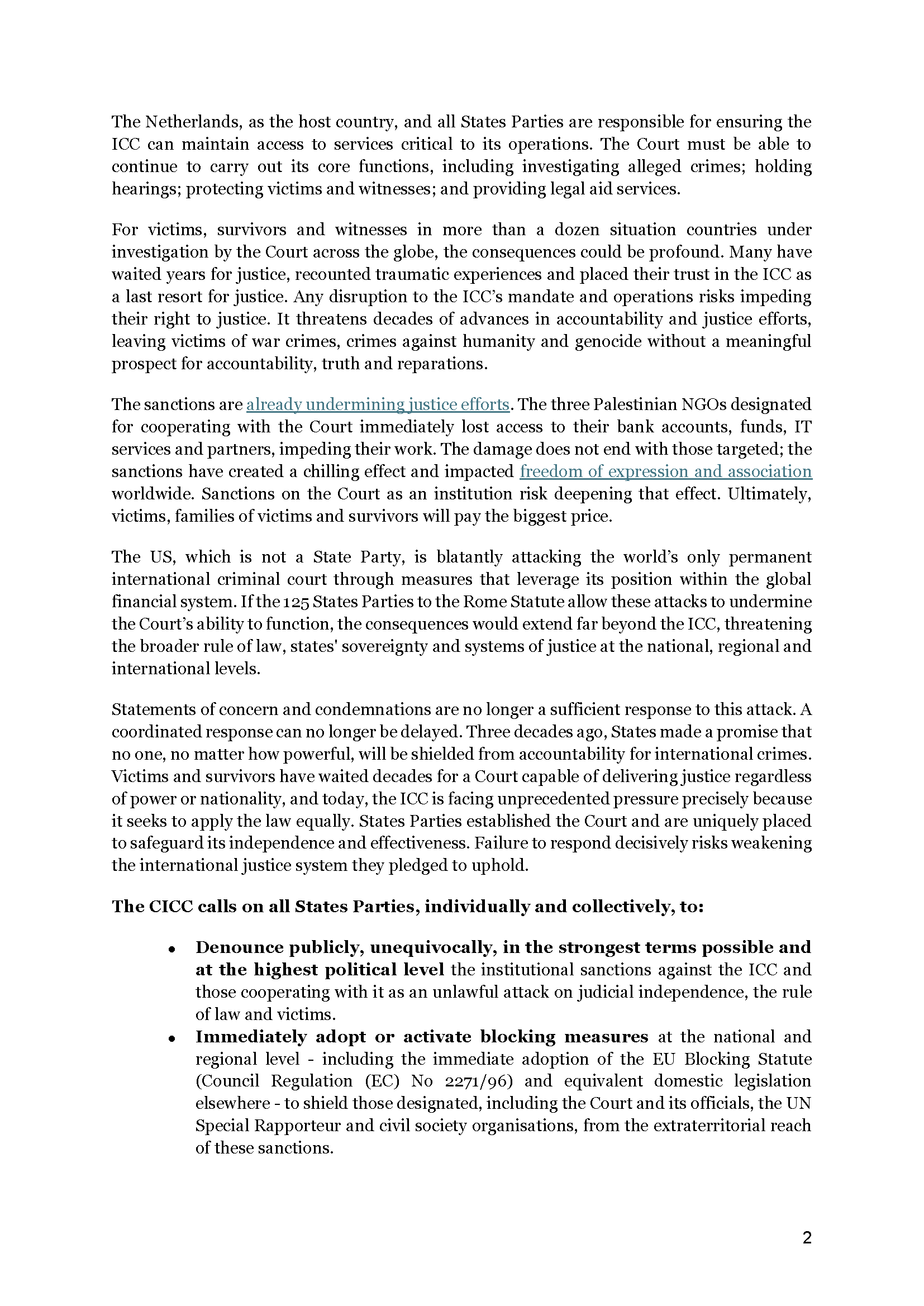
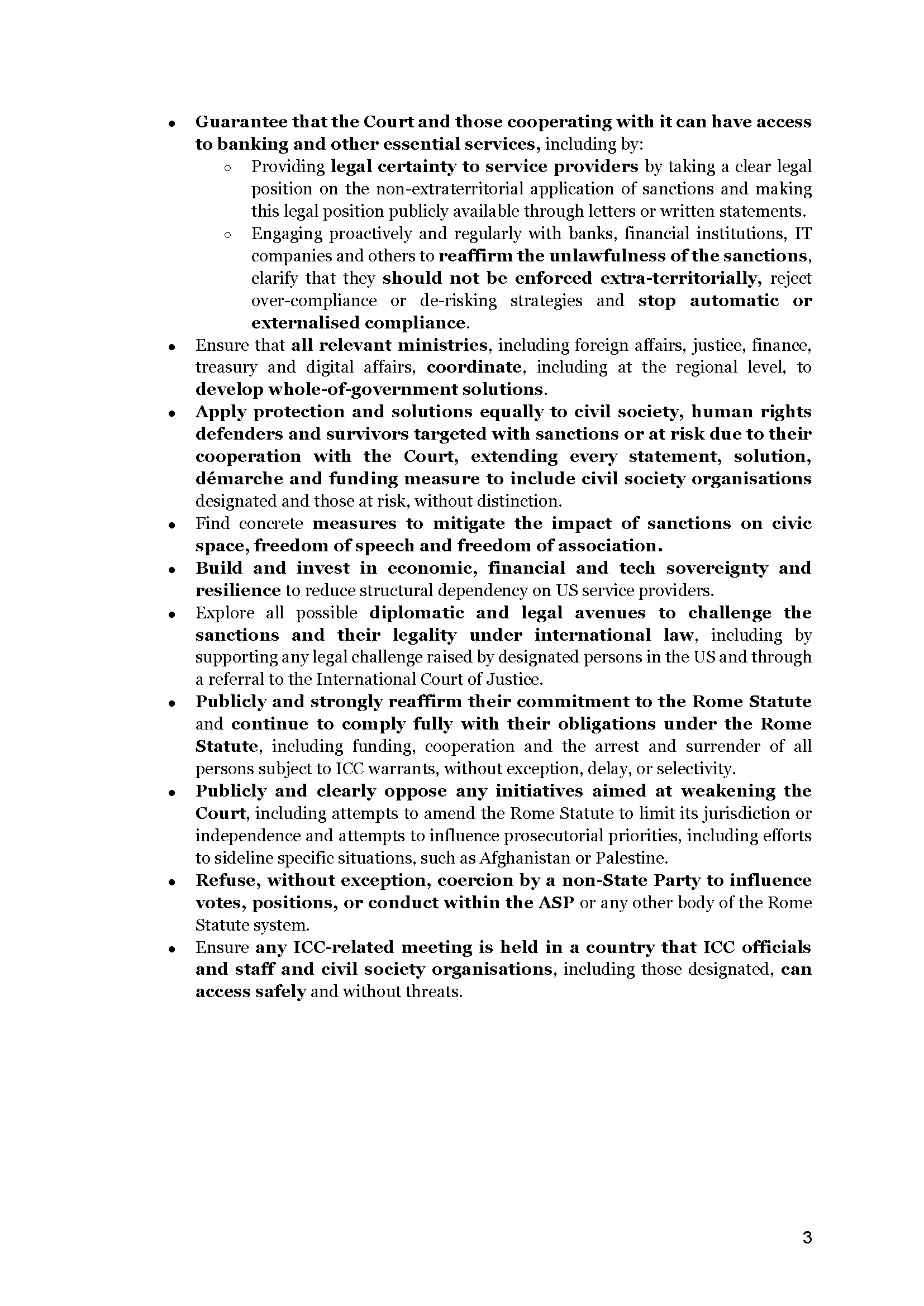
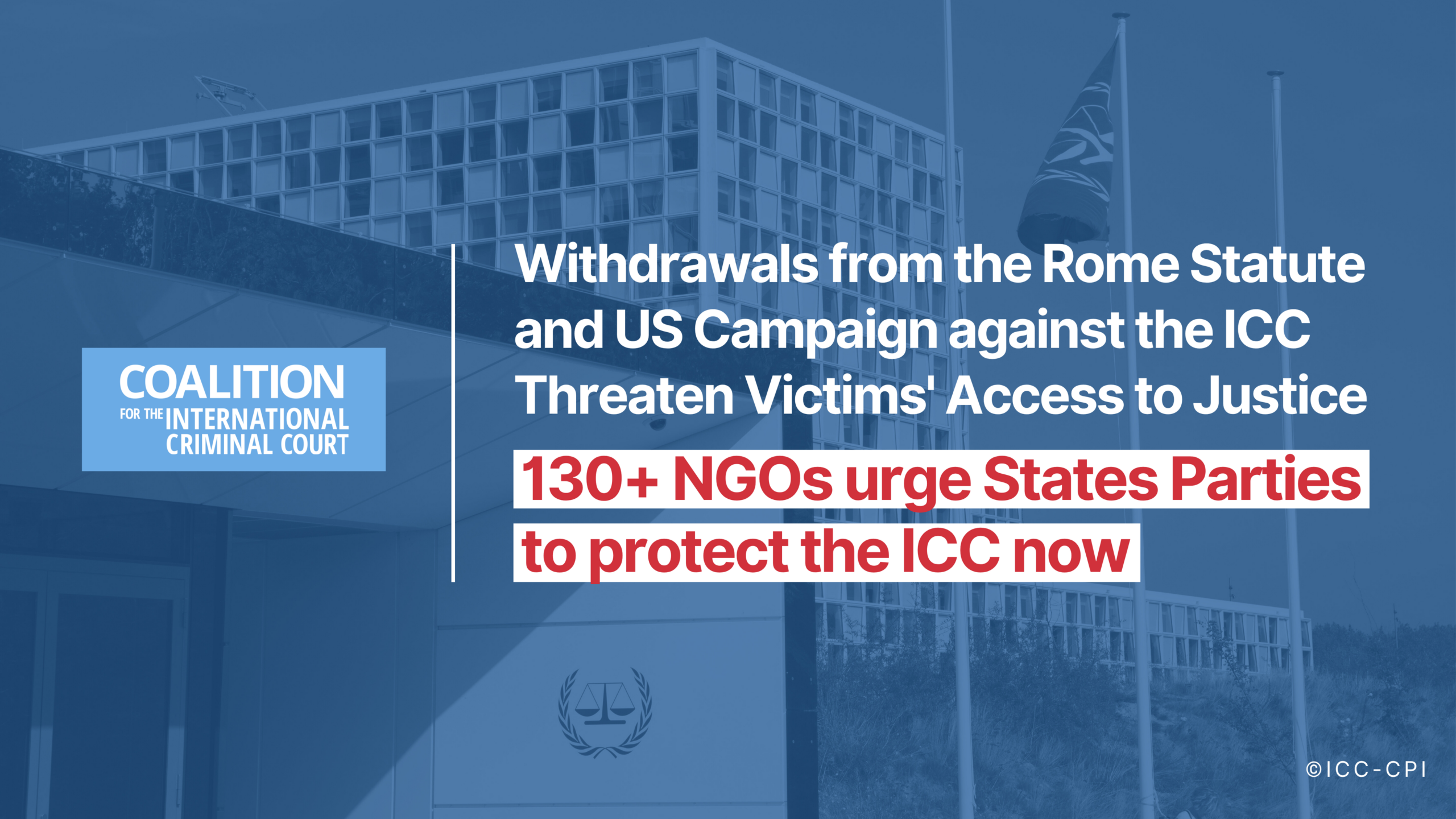
Sunflowers joins 130+ civil society organisations in call to defend the ICC and the Rome Statute system

More than 130 civil society organisations from 56 countries have called on States Parties to the Rome Statute to take collective action to protect the independence of the International Criminal Court (ICC) and safeguard the international justice system. The Foundation Sunflowers has joined the signatories of this statement.
 
The joint statement, prepared by the Coalition for the International Criminal Court (CICC), comes in response to recent developments that threaten the integrity and effectiveness of the system established by the Rome Statute.
 
Within the space of just two months, Mali, Burkina Faso, Niger, Venezuela and Chad formally notified the United Nations of their intention to withdraw from the Rome Statute. At the same time, the United States has intensified its attacks on the ICC and the independence of international justice, including through additional sanctions and diplomatic pressure aimed at encouraging States Parties to withdraw from the Rome Statute.
 
Why does this matter?
The ICC was established to ensure accountability for the most serious international crimes — genocide, crimes against humanity and war crimes — where national authorities are unwilling or unable to genuinely investigate and prosecute those responsible.
 
The weakening of the Rome Statute system can have direct consequences for victims and survivors. Withdrawals may undermine cooperation with the Court, including access to victims and witnesses, as well as the arrest and surrender of suspects. They can also create safe havens in which perpetrators of the most serious crimes may evade accountability.
 
The signatories therefore call on the five States that have announced their withdrawal to reverse their decisions before they take effect. They also call on States Parties and regional organisations to reject attacks against the ICC, prevent further withdrawals, resist political pressure and reaffirm their commitment to the Rome Statute system.
 
At the same time, the statement recognises that concerns about fairness and selectivity in international justice must be taken seriously. However, such concerns should be addressed through dialogue, cooperation and efforts to strengthen the international justice system — not through unilateral withdrawals from the Rome Statute.
 
Victims must remain at the centre
 
For the Foundation Sunflowers, the statement is particularly important because of its focus on victims and survivors.
 
The pursuit of accountability is not an end in itself. Victims and survivors need meaningful access to justice, truth and reparations, and international justice mechanisms must remain capable of responding to their rights and needs.
The promise made to victims nearly three decades ago in Rome — that impunity for the most serious international crimes should no longer be the norm — must not be undermined by political pressure or by the weakening of the system created to fulfil that promise.
 
As a Foundation working to support accountability for international crimes and to strengthen access to justice and reparations for victims, Sunflowers stands with the organisations calling for the protection of the Rome Statute system and the independent work of the ICC.
 
Read the full statement and the call to action: HERE
News

Sunflowers joins European call to protect the International Criminal Court

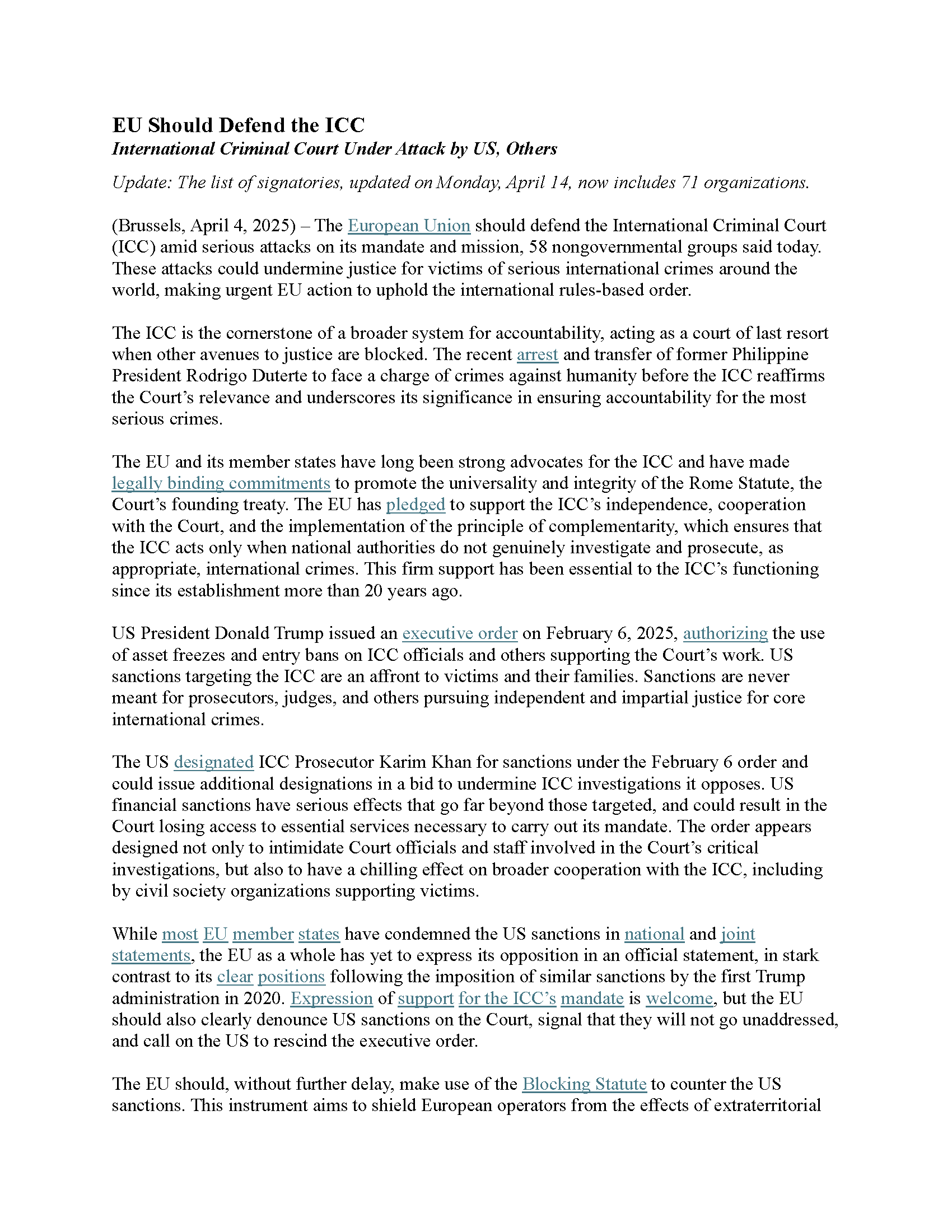
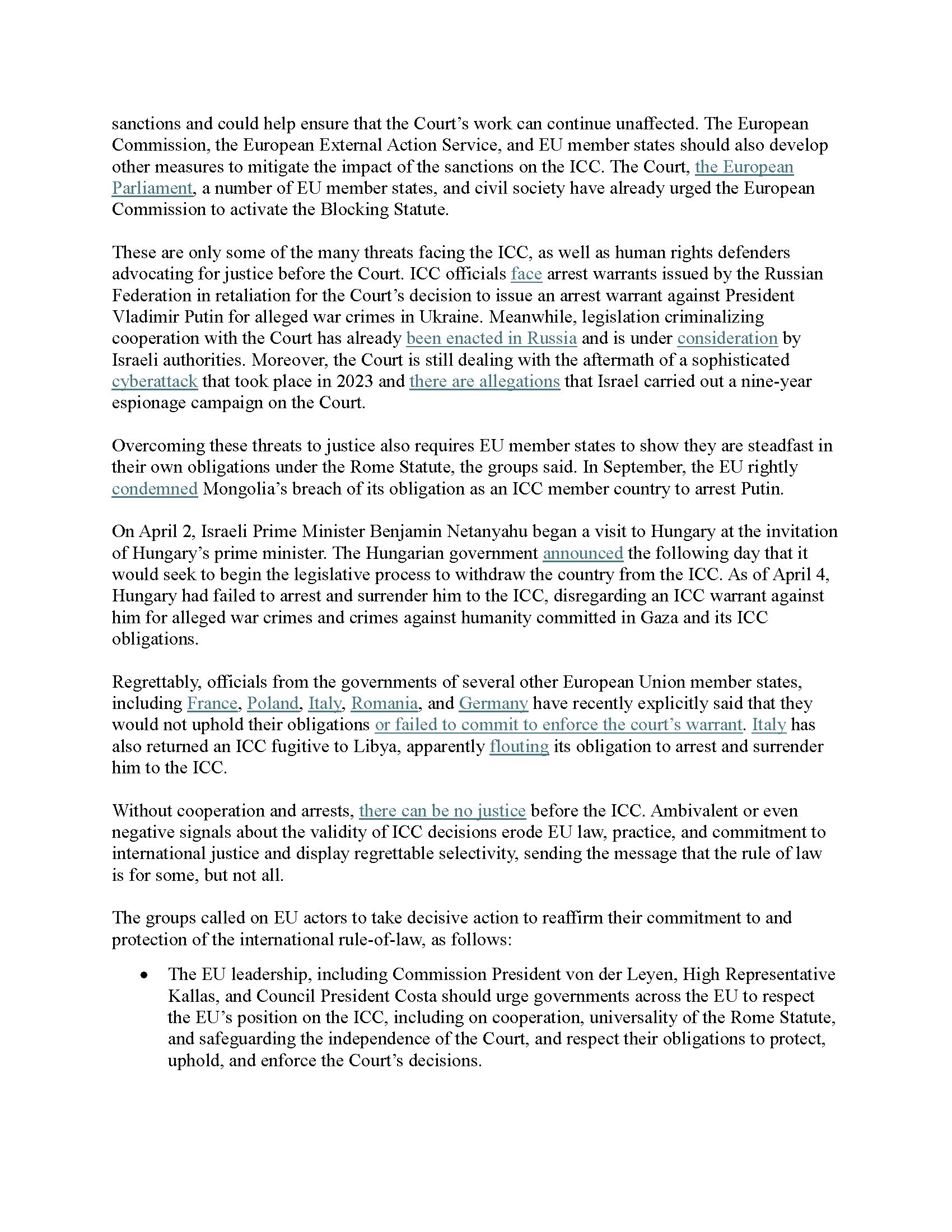
On 17 July 2026, Foundation Sunflowers joined a European civil society initiative calling for concrete legal and political action to protect the International Criminal Court (ICC) from escalating U.S. sanctions.
 
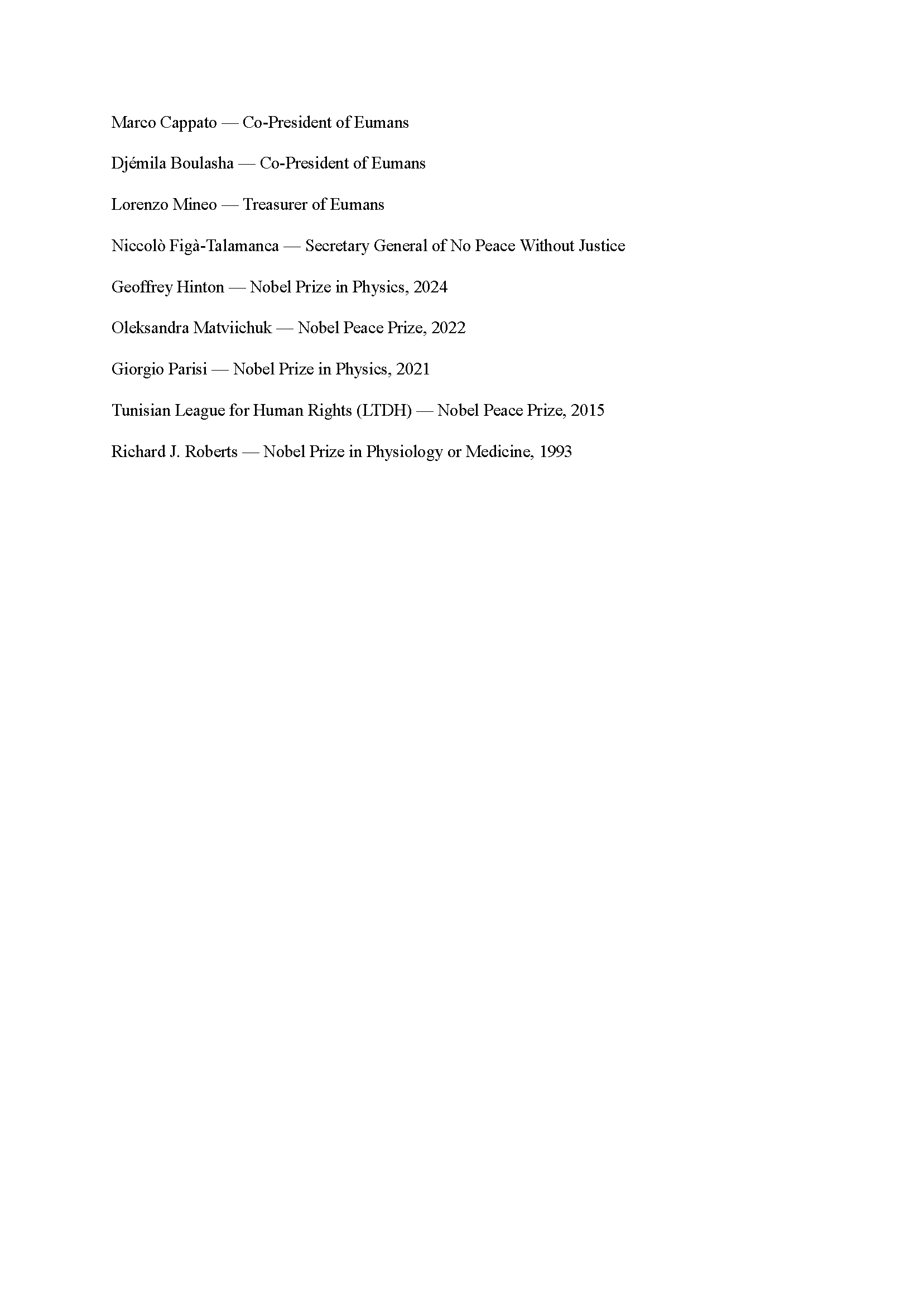
The Foundation was among the signatories of the statement, initiated by No Peace Without Justice and Eumans, alongside MEPs Chloé Ridel and Brando Benifei and Nobel Peace Prize laureates, including Oleksandra Matviichuk. The statement calls on European citizens, human rights defenders and advocates for international law to urge the European Union to take effective measures to safeguard the independence and functioning of the ICC, including by activating the EU Blocking Statute.
 
For Sunflowers, supporting the ICC and the international justice system is an important part of our commitment to accountability for international crimes and to strengthening mechanisms that protect victims and support the pursuit of justice.
News

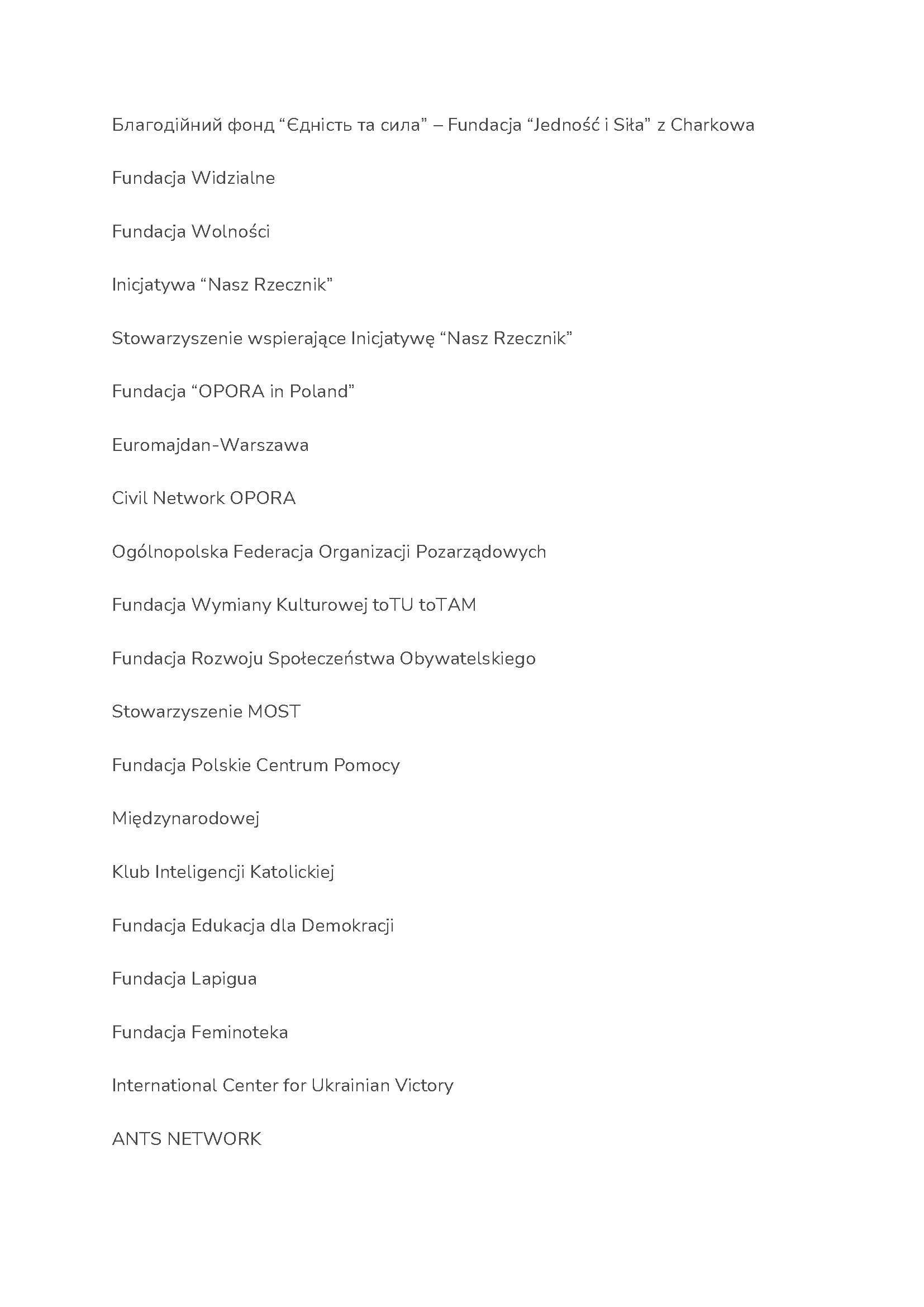
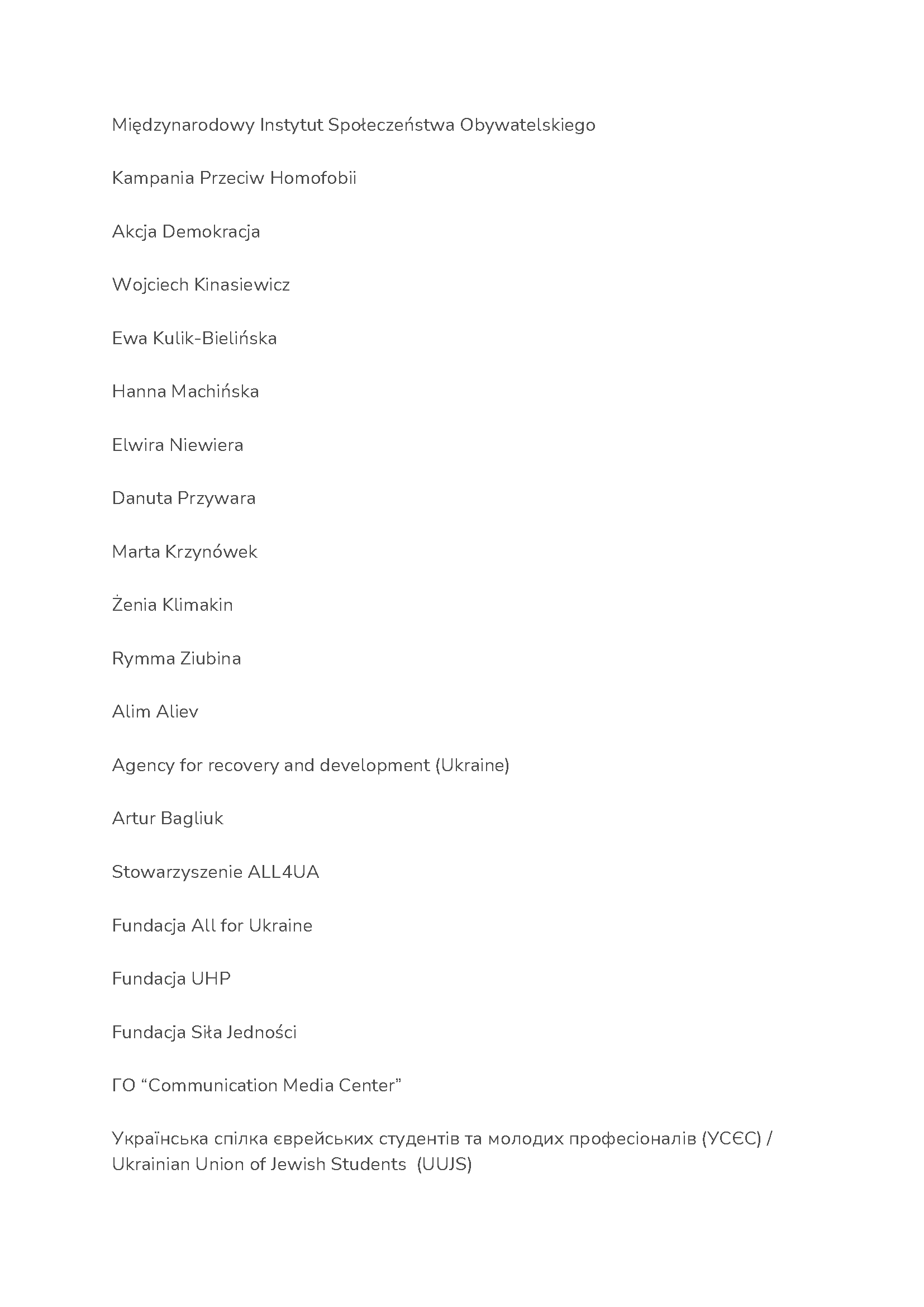
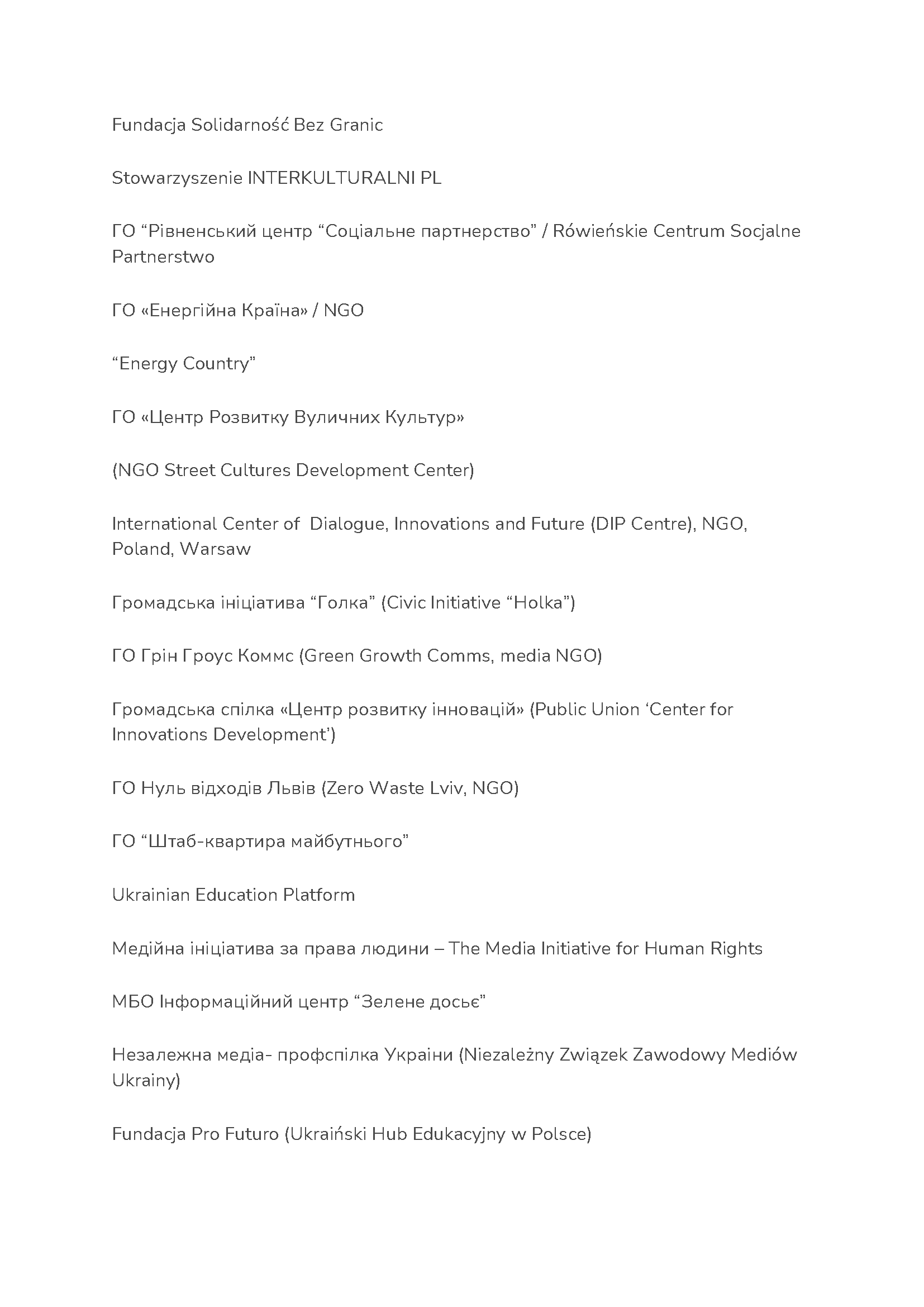
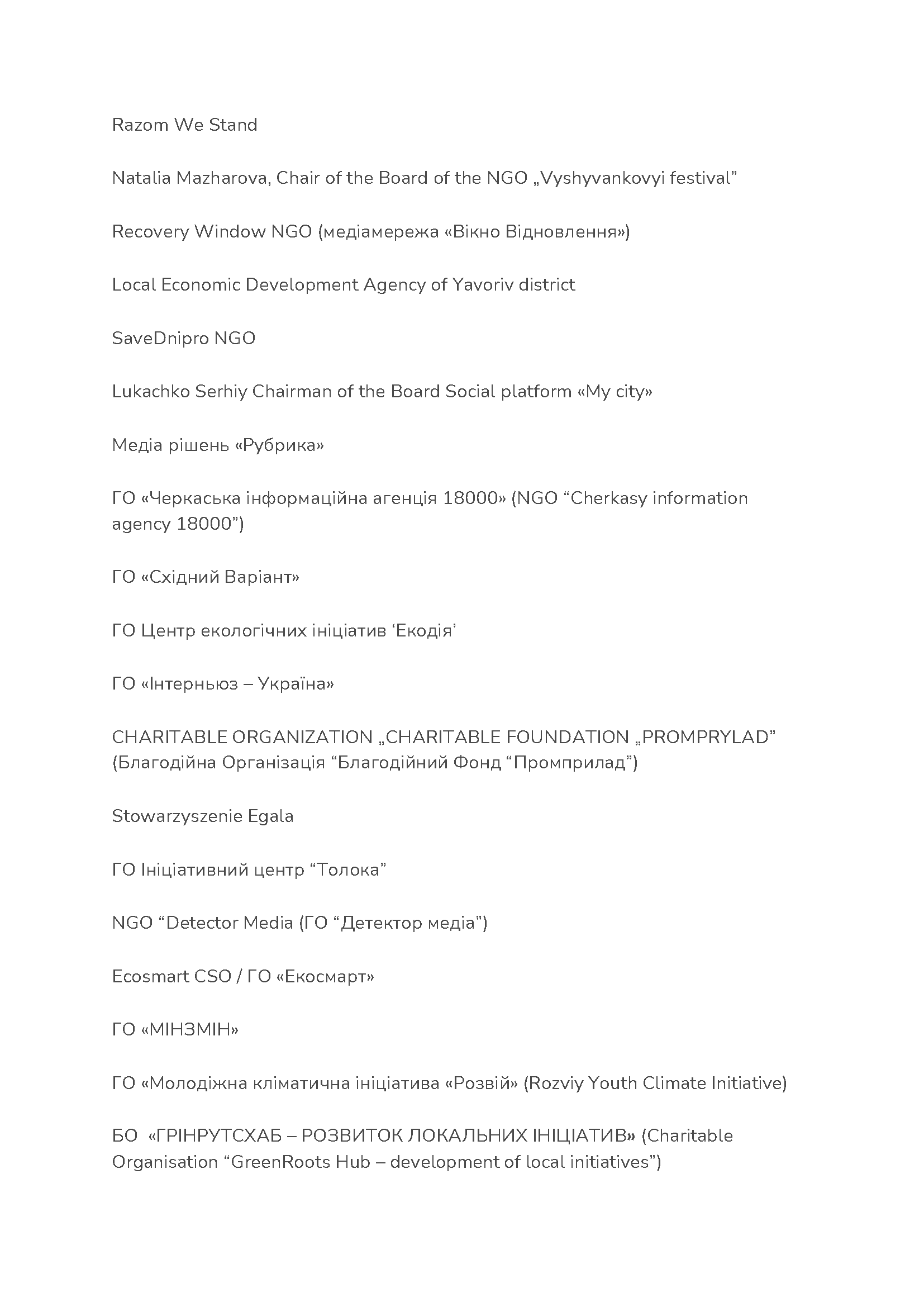
Sunflowers signs joint statement of Polish and Ukrainian civil society

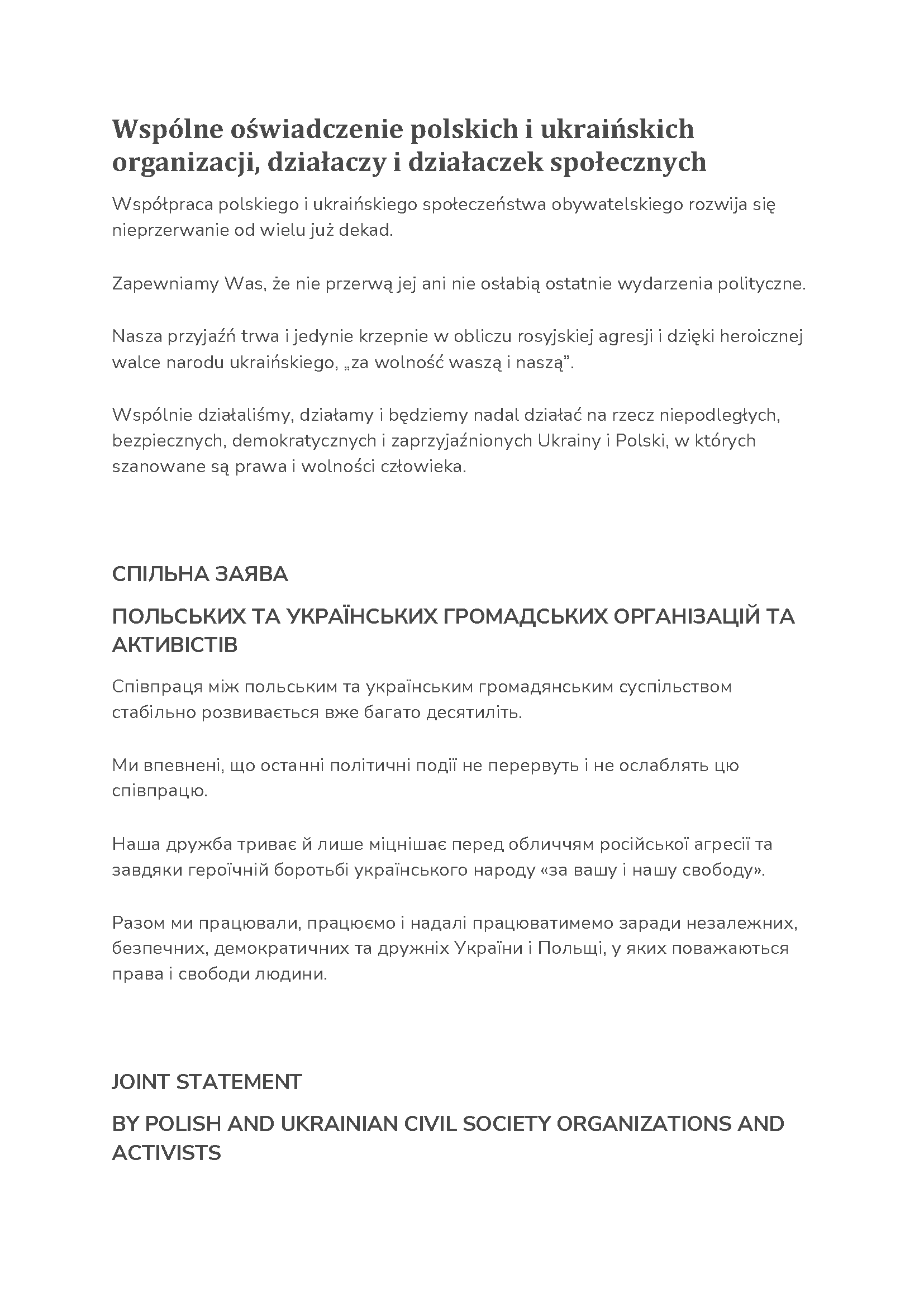
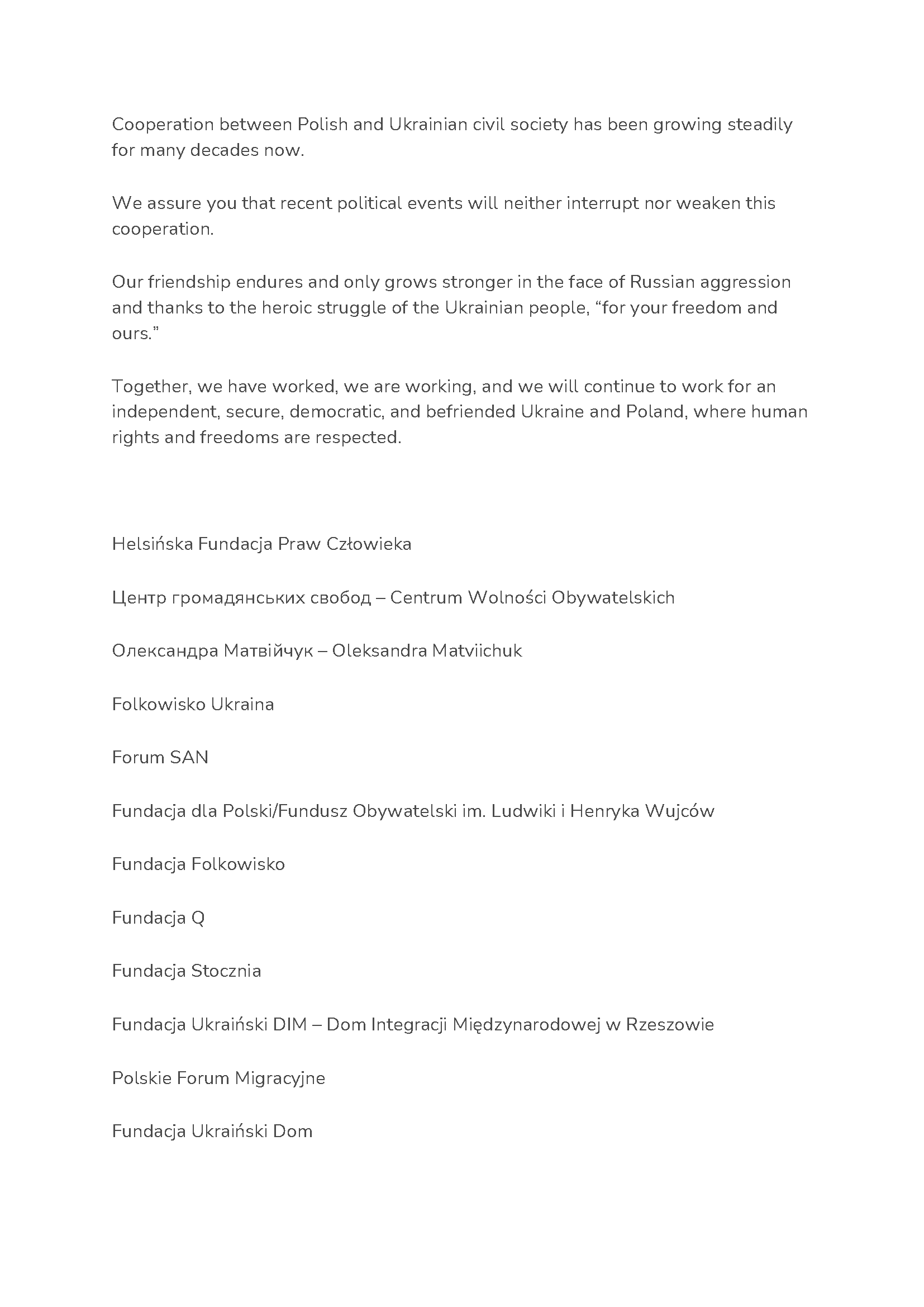
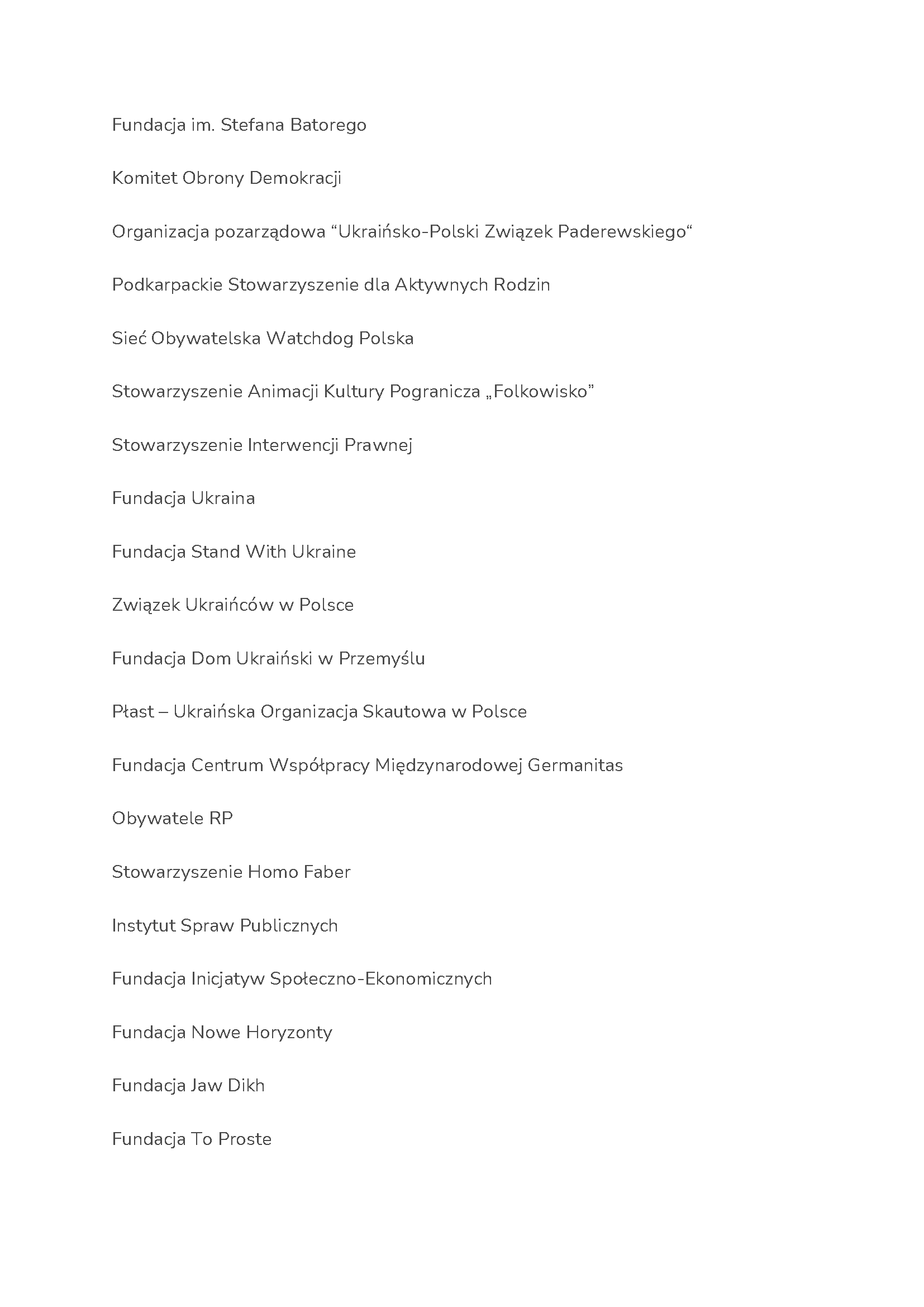
The Foundation Sunflowers has joined Polish and Ukrainian civil society organisations and activists in signing a joint statement reaffirming the strength and continuity of Polish-Ukrainian civil society cooperation.
 
The statement emphasises that recent political developments will not weaken the long-standing friendship and cooperation between the two countries. Together, the signatories reaffirm their commitment to an independent, secure and democratic Ukraine and Poland, where human rights and fundamental freedoms are respected.
 
Sunflowers stands firmly behind this message of solidarity, friendship and continued cooperation between Polish and Ukrainian civil society.
News

Justice in Times of War: Academic Event Series for Law Students Launches Across Poland

“Justice in Times of War: From Documentation to Accountability” is a series of academic events organized by the Foundation Sunflowers and hosted at law faculties across Poland. The initiative is designed for law students and aims to explore the challenges faced by the justice system in situations of armed conflict, with a particular focus on the experience of Ukraine. 

Each event features a screening of a documentary film portraying the work of Ukrainian judges during wartime, offering a unique insight into the functioning of the judiciary under extreme conditions, including the documentation and adjudication of international crimes.  

The screening is followed by a moderated discussion addressing key issues such as the need to support the Ukrainian justice system, the ethical responsibilities of judges in times of war, and the role of the international legal community in ensuring accountability for war crimes. The events are interactive and provide a platform for dialogue between students and experts. 

The series is held under the honorary patronage of the Ambassador of Ukraine to Poland, Mr. Vasyl Bodnar, highlighting the importance and timeliness of the initiative. Co-organizers of the series of events are the EU Project Pravo-Justice (producer of the documentary), Wolters Kluwer Polska and European Law Students’ Association ELSA-Poland. The media patron of the initiative is Prawo.pl. 

Each meeting concludes with a brief presentation of the Project’s Sunflowers activities as an example of a legal initiative supporting international justice and raising awareness of legal responses to armed conflict. 

News

Sunflowers joins joint statement in defence of the International Criminal Court

The Foundation Sunflowers has joined other civil society organisations in signing a joint statement calling on the European Commission to activate the EU Blocking Statute to protect the International Criminal Court (ICC) from the effects of U.S. sanctions.
 
The statement highlights that the European Union already has a legal mechanism — Council Regulation (EC) No 2271/96, known as the Blocking Statute — which can prevent the extraterritorial effects of certain foreign sanctions within the EU. The European Parliament has repeatedly called for the U.S. sanctions against the ICC to be included in the Regulation’s Annex.
 
The initiative, led by No Peace Without Justice and Eumans, calls on European institutions and citizens to take action in defence of the ICC, its officials and organisations supporting its work.
 
By signing the statement, Sunflowers reaffirms its support for the independence of international justice mechanisms and for the effective pursuit of accountability for international crimes.